Regulations on Chemical Import Procedures 2026
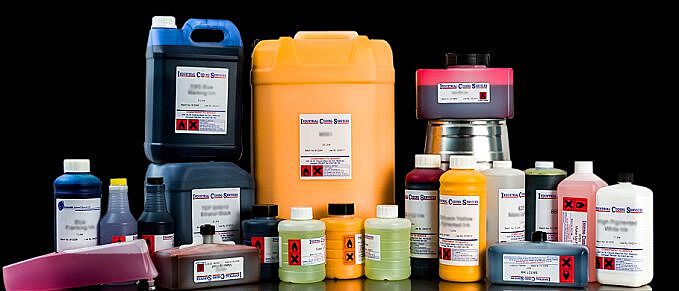
Based on practical experience in providing chemical import services, K PLUS summarizes in this article key matters related to chemical imports, including state management regulations on chemicals, chemical import procedures, import taxes, and the import process.
What Are Chemicals?
In chemistry, a chemical or chemical substance is a form of matter with a fixed chemical composition and characteristic properties. It cannot be separated into simpler substances by physical methods without breaking chemical bonds. Chemicals exist in gaseous, liquid, solid, and plasma states.
Chemical Import Procedures 2026
State Management of Chemicals
First, to determine whether a chemical must be declared upon import, importers must identify the CAS number of the chemical. Then, check Decree No. 113/2017/ND-CP to determine whether it is listed in Appendix V.
When importing chemicals, chemical (precursor) declaration is mandatory, as stipulated in Decree No. 113/2017/ND-CP, and must be completed prior to customs clearance via the National Single Window Portal.
Information Required for Chemical Import Declaration
The chemical import declaration, made in accordance with the form specified in Appendix VI of the Decree via the National Single Window Portal, includes:
-
Information on the declaring organization or individual
-
Information on the imported chemicals
-
Chemical purchase/sales invoice
-
Safety Data Sheet (SDS) in Vietnamese
-
In the case of non-commercial imports without a purchase/sales invoice, the organization or individual may use an Arrival Notice in lieu of a commercial invoice
Cases Exempt from Chemical Declaration
Chemical declaration is not required in the following cases:
-
Chemicals produced or imported for national security, defense, or emergency response to natural disasters or epidemics
-
Chemicals classified as drug precursors, explosive precursors, industrial explosives, and listed chemicals that have already been licensed for production or import
-
Chemicals imported in quantities of less than 10 kg per shipment (this exemption does not apply to chemicals subject to restricted production and business in the industrial sector)
-
Chemicals used as pharmaceutical raw materials that already have a Certificate of Drug Marketing Authorization in Vietnam
-
Chemicals used as raw materials for plant protection products that already have a Certificate of Registration for Plant Protection Products in Vietnam
Customs Procedures for Chemical Imports
Customs clearance procedures for imported chemicals are carried out in the same manner as other imported goods, with the addition of the chemical declaration result.
For applicable legal documents governing customs procedures, please refer to relevant regulations on export and import customs procedures.
Chemical Labeling
Imported chemicals must bear full and compliant labeling in accordance with current regulations.
For more details, please refer to regulations on labeling of imported goods.
General Chemical Import Process
Typically, importing a shipment involves seven stages:
-
Pre-contract preparation
-
Contract signing
-
Payment
-
Delivery
-
Customs clearance
-
Cargo receipt
-
Post-clearance procedures
New importers may refer to general import procedure guidelines for an overview of the entire process.
Types of Chemicals
Conditionally Manufactured and Traded Chemicals in the Industrial Sector
These include:
-
Substances listed in the List of Conditionally Manufactured and Traded Chemicals in the Industrial Sector issued in Appendix I of Decree No. 113/2017/ND-CP
-
Mixtures containing substances listed in Appendix I, and mixtures containing substances listed in Appendix II but not falling under Article 14 of Decree No. 113/2017/ND-CP, classified in accordance with Article 23 of the same Decree into at least one of the following hazard categories:
a) Physical hazards Category 1, 2, or 3, or Types A, B, C, and D
b) Acute toxicity (via various exposure routes) Category 2 or 3
c) Serious eye damage / eye irritation Category 1 or 2/2A
d) Skin corrosion / skin irritation Category 1 or 2
e) Carcinogenicity, germ cell mutagenicity, reproductive toxicity Category 2
f) Environmental hazards Category 1
➡ Organizations and individuals importing or exporting these chemicals must obtain a Certificate of Eligibility for Conditional Chemical Trading in the Industrial Sector issued by the provincial Department of Industry and Trade where the business is located.
Restricted Chemicals in the Industrial Sector
These include:
-
Substances listed in the List of Chemicals Restricted from Production and Trading in the Industrial Sector issued in Appendix II of Decree No. 113/2017/ND-CP
-
Mixtures containing substances listed in Appendix II and classified under Article 23 of Decree No. 113/2017/ND-CP into at least one of the following hazard categories:
a) Acute toxicity Category 1
b) Carcinogenicity Category 1A or 1B
c) Reproductive toxicity Category 1A or 1B
d) Germ cell mutagenicity Category 1A or 1B
➡ Organizations and individuals importing or exporting these chemicals must obtain a Certificate of Eligibility for Trading Restricted Chemicals in the Industrial Sector issued by the Ministry of Industry and Trade.
Prohibited Chemicals and Toxic Chemicals
Prohibited Chemicals
Under Article 18 of Decree No. 113/2017/ND-CP guiding the Law on Chemicals:
-
The List of Prohibited Chemicals is stipulated in Appendix III of the Decree
-
In special cases for scientific research, national defense, security, or epidemic prevention and control, the production, import, and use of prohibited chemicals must comply with Article 19 of the Law on Chemicals and relevant government regulations
Toxic Chemicals
-
Toxic chemicals are defined in Clause 5, Article 4 of the Law on Chemicals
-
The purchase and sale of toxic chemicals require a Toxic Chemical Transaction Control Form, in accordance with Article 23 of the Law on Chemicals
Industrial Precursors
Industrial precursors are chemicals used as raw materials, solvents, or catalysts in production, scientific research, analysis, and testing. They are also essential chemicals in the synthesis and production of narcotics and are listed by the Government.
Industrial precursors are classified by hazard level into:
-
Group 1 Industrial Precursors: Essential chemicals used in the synthesis and production of narcotics
-
Group 2 Industrial Precursors: Chemicals used as reactants or solvents in the synthesis and production of narcotics
The list of industrial precursors is stipulated in Decree No. 113/2017/ND-CP.
➡ Organizations and individuals importing or exporting industrial precursors must obtain an Import/Export License issued by the competent authority. This license is a mandatory condition for customs clearance.
Notes on Import/Export Licenses for Industrial Precursors
License validity:
-
For Group 1 industrial precursors, licenses are issued per shipment and are valid for 6 months from the date of issuance
-
For Group 2 industrial precursors, licenses are valid for 6 months from the date of issuance
Cases exempt from import/export licensing:
-
Goods containing less than 1% by weight of Group 1 industrial precursors
-
Goods containing less than 5% by weight of Group 2 industrial precursors
Cases where licenses are revoked:
-
Alteration or erasure of license contents without authorization
-
Use of falsified documents or provision of false information in the license application dossier
-
Termination of operations by the licensed organization or individual
The licensing authority specified in Clause 8, Article 12 of this Decree is also responsible for license revocation. Organizations or individuals whose licenses are revoked must return the revoked license to the issuing authority within 07 working days from the date of the revocation decision.
Latest Guidance on Checking Chemical Import Duties
Access the Import–Export Tariff Schedule and click on the “Search” function. A tariff spreadsheet will appear. Enter the HS code of the chemical product to find:
-
Import duty
-
Preferential import duty
-
Special preferential import duty (latest updates)
Note: The search results are for reference only. For accuracy, you should contact K PLUS for consultation or verify directly with the original legal documents (usually referenced in the tariff schedule).
📞 Hotline: 0987 042 291