Durian Export Procedures
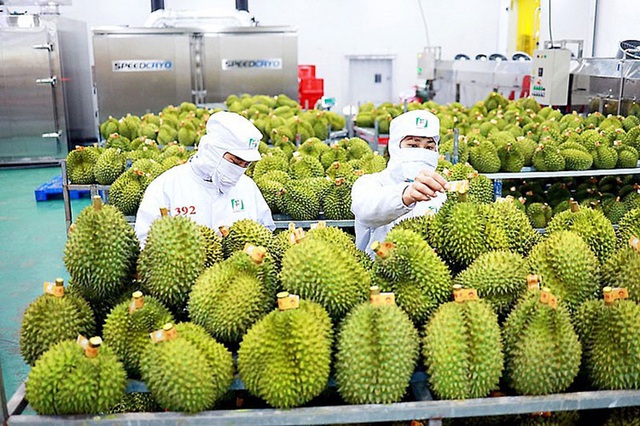
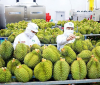
Durian is one of Vietnam’s most famous specialty fruits. It is cultivated on an area of approximately 47,300 hectares, mainly in the Mekong Delta and the Southeast region. Currently, durian is also widely grown in the Central Highlands, raising the country’s total output to around 478,600 tons per year. As a result, domestic supply is no longer sufficient to meet consumption demand.
As the culinary and tourism industries continue to grow, demand for durian has increased significantly. Countries such as China and Australia have long imported durian from Vietnam to meet domestic consumer demand. In recent years, the Vietnam–EU Free Trade Agreement (EVFTA) has come into effect, creating favorable conditions for Vietnam’s durian exports to the EU market. At present, China and Australia remain Vietnam’s leading export markets for durian.
1. HS Code for Durian
The HS code for durian is 08106000.
2. Customs Dossier for Durian Export
The customs dossier for exporting durian includes the following documents:
-
Customs declaration
-
Proof of goods origin/input documents (purchase invoices, procurement lists)
-
Commercial Invoice
-
Sales Contract (if any)
-
Bill of Lading
-
Packing List
In addition, depending on the requirements of the importing partner, the following documents may be required:
-
Certificate of Origin (C/O)
-
Phytosanitary Certificate
-
Health Certificate (HC)
-
Other relevant supporting documents
3. Important Notes When Exporting Durian
3.1 Certificate of Origin (C/O) for Durian Export
The Certificate of Origin is not a mandatory document for customs clearance. However, importers may require a C/O for shipments to markets that have free trade agreements with Vietnam, allowing them to benefit from preferential import duty rates.
For example:
-
ASEAN markets: C/O Form D
-
China: C/O Form E
-
United States: C/O Form B
Documents required to apply for a C/O for durian exports include:
-
Bill of Lading, Commercial Invoice, Packing List, Export Customs Declaration
-
Production norms and production processes
-
Raw material input documents (import declarations, raw material purchase invoices, procurement lists, etc.)
3.2 Phytosanitary Procedures for Durian Export
Two to three days before shipment, enterprises must register for phytosanitary inspection of exported durian with the Plant Quarantine Authority.
Phytosanitary registration dossier includes:
-
Application for phytosanitary inspection (standard form)
-
Packing List
-
Power of Attorney for phytosanitary procedures (if applicable)
-
Samples from the exported durian shipment
Phytosanitary inspection process:
-
Registration: The exporter submits the phytosanitary registration dossier to the Plant Quarantine Authority and declares information online via the National Single Window Portal.
-
Sampling: The exporter must register for inspection at least 1–2 days before delivering goods to the port. The authority will take samples for inspection, either at the port or at the processing facility.
-
Information declaration: Shipment information is declared in the system to generate a draft certificate.
-
Document supplementation and certificate issuance: After reviewing and confirming or correcting the draft certificate with the authority, the exporter submits additional documents and receives the original phytosanitary certificate.
Note:
For the first shipment, the Plant Quarantine Authority may inspect goods at the production facility or at the port. For subsequent shipments, enterprises may choose to bring goods to the local quarantine office for inspection, depending on their preference.
3.3 Preservation of Exported Durian in Packaging
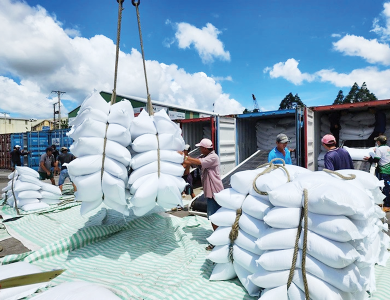
Tropical fruits such as durian have a relatively short shelf life. To ensure product quality during transportation—especially for demanding markets like the EU, which prohibit the use of preservatives, including biological preservatives—the following measures should be applied:
-
After harvesting, durians should be allowed to dry before packaging to prevent rapid spoilage caused by moisture.
-
Use specialized foam netting of appropriate sizes to protect individual fruits. These nets are designed to prevent impact and friction during transportation. For additional protection, fruits may be wrapped in newspaper.
-
Use foam boxes or carton boxes suitable for large-sized fruits. Packaging must be kept dry and protected from direct sunlight throughout the transportation process to avoid damage.
3.4 Conditions for Exporting Durian to China
To enable official (formal) exports of Vietnamese durian to the Chinese market, the following requirements must be met:
For growing areas and farmers:
-
Implement appropriate pest management measures, ensure food safety, and ensure pesticide residues do not exceed permitted limits;
-
Comply with packaging standards and labeling requirements;
-
All durian growing areas registered for export to China must establish a quality management and traceability system and apply Good Agricultural Practices (GAP);
-
Maintain records of pest monitoring and control, which must be provided to the General Administration of Customs of China (GACC) upon request.
For processing facilities:
-
Have solid, clean, and hygienic flooring, with designated areas for raw materials and finished goods storage;
-
Processing, handling, preservation, and functional areas must be completely separated, well-organized, and isolated from living areas.
For packing facilities:
-
Packing units must brush or clean the fruit surface using high-pressure water guns or apply other effective measures to remove insect eggs and fungal spores.
Thank you for taking the time to read this article. We hope it has helped you gain a clearer understanding of durian export procedures. If you encounter any difficulties during import–export operations, K Plus is ready to be your trusted partner. With an experienced, honest, and dedicated team, we prioritize our customers’ interests and are committed to ensuring shipments are delivered safely, quickly, and at the most reasonable cost.
For free consultation, please contact K Plus:
📞 Hotline: 0987 042 291