Rice Export Procedures in Vietnam
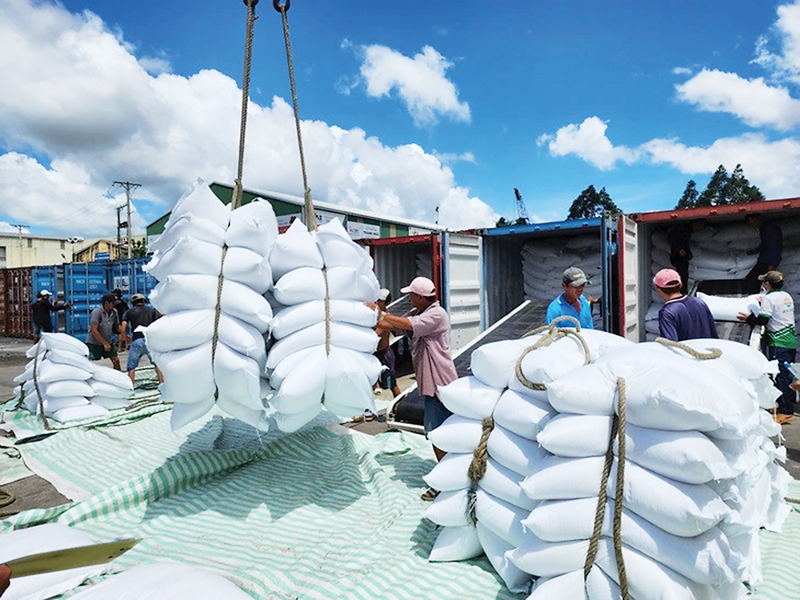
Vietnam is currently the third-largest rice exporter in the world, built on a strong foundation as a country developed from wet-rice civilization. Therefore, rice is not only a staple food but also a strategic export commodity. Rice is Vietnam’s key agricultural export product, making it unsurprising that Vietnam ranks among the leading rice-exporting countries in Southeast Asia and worldwide.
According to statistics from the Customs Authority, in 2022, Vietnam exported 7.1 million tons of rice, with a total value of USD 3.45 billion, representing an increase of 13.8% in volume and 5.1% in value compared to the same period in 2021.
According to the Ministry of Agriculture and Rural Development, as of early April 2023, rice exports reached nearly 3 million tons, with a turnover of USD 1.56 billion, up 43.6% in volume and 54.5% in value year-on-year.
Notably, the average export price of rice was estimated at USD 526 per ton, an increase of 7.6% compared to the same period. At this price level, Vietnamese rice surpassed Thailand to become the highest-priced rice in the world, marking the highest export price in the past two years.
Vietnam’s largest rice export markets remain the Philippines, Indonesia, China, South Korea, EU countries, and the United States.
So, how are rice export procedures carried out? Is an export license required? What is the export process like? In this article, K PLUS will guide you through and answer questions related to rice export procedures.
1. HS Codes for Rice
The HS codes for exported rice fall under Chapter 10 – Cereals, heading 1006. Below are the detailed HS codes for each type of rice for reference:
1006 – Rice
| HS Code | Description |
|---|---|
| 100610 | Paddy rice |
| 10061010 | – Suitable for sowing |
| 100620 | Husked (brown) rice |
| 10062010 | – Hom Mali rice (SEN) |
| 10062090 | – Other |
| 100630 | Semi-milled or wholly milled rice, whether or not polished or glazed |
| 10063030 | – Glutinous rice (SEN) |
| 10063040 | – Hom Mali rice (SEN) |
| 10063050 | – Basmati rice (SEN) |
| 10063060 | – Malys rice (SEN) |
| 10063070 | – Other aromatic rice (SEN) |
| 10063091 | – – Parboiled rice |
| 10063099 | – – Other |
2. Customs Dossier for Rice Export
The customs dossier for exporting rice generally includes the following documents:
-
Commercial Invoice
-
Packing List
-
Bill of Lading
In addition, depending on the requirements of the importing partner, the following documents may be required:
-
Certificate of Origin (C/O)
-
Certificate of Free Sale (CFS)
-
Health Certificate (H/C)
-
Phytosanitary Certificate
-
Fumigation Certificate
-
Other relevant supporting documents
3. Important Notes When Exporting Rice
3.1 Export Policy and Export Contracts for Rice
According to regulations on rice export management, enterprises must obtain a Certificate of Eligibility for Rice Trading and Exporting issued by the Ministry of Industry and Trade.
When exporting rice, enterprises are required to register the rice export contract.
The rice export contract registration dossier includes:
-
Application for registration of the rice export contract
-
The original or certified copy of the signed rice export contract
-
Original report on available paddy and rice quantities, clearly stating:
-
Total paddy quantity
-
Total rice quantity
-
Warehouse addresses
-
Quantity stored at each warehouse
-
-
Certified copy of the valid Certificate of Eligibility for Rice Trading and Export (required for first-time registration)
In cases where preferential treatment is applied under government regulations, traders must submit an additional request for priority consideration along with a summary report on direct purchases of paddy and rice from producers through agricultural product consumption contracts, together with relevant supporting documents.
3.2 Phytosanitary Inspection for Rice Export
The phytosanitary inspection dossier for rice exports includes:
-
Application for phytosanitary inspection (in accordance with the form issued by the Plant Protection Authority under Appendix IV of Circular No. 33/2014/TT-BNNPTNT)
-
Commercial invoice, bill of lading, and packing list (if any)
-
Authorization letter from the cargo owner (if the applicant is an authorized representative)
-
Rice samples from the shipment for inspection
If the shipment meets the phytosanitary requirements of the importing country, the Plant Quarantine Authority will issue a Phytosanitary Certificate. Otherwise, the certificate will not be granted.
3.3 Labeling Requirements for Rice Export (Shipping Marks)
To facilitate transportation and customs clearance, exporters should affix shipping marks on packages. A standard shipping mark usually includes:
-
Product name in English
-
Name of the importer
-
MADE IN VIETNAM
-
Package number / total number of packages
Additional information may be included, such as contract number or invoice number.
Special handling and transportation instructions may also be indicated, for example: keep upright, fragile goods, etc.
Thank you for taking the time to read this article. We hope it helps you gain a clearer understanding of rice export procedures.
If you encounter any difficulties or issues during import–export procedures, K PLUS is ready to be your trusted partner. With an experienced, dedicated, and professional team, we always prioritize our customers’ interests and are committed to ensuring shipments arrive safely, quickly, and at the most reasonable cost.
For free consultation, please contact K PLUS:
📞 Hotline: 0987 042 291