PROCEDURES FOR EXPORTING GARMENT AND TEXTILE PRODUCTS
Formal (official) export of textile and garment products is one of the sectors accounting for a large proportion of Vietnam’s official export turnover. However, many newcomers to the industry are still unclear about the processes, procedures, documents, and paperwork required to carry out garment exports. The following article by K PLUS provides detailed information on this export sector.
Table of Contents
-
Overview of Vietnam’s official garment and textile exports
-
Required documents for official garment exports
-
Latest official garment export procedures
-
Regulations related to garment and textile import and export
-
Exported garment and textile products of Vietnam
-
Notes for official garment exports
1. Overview of Vietnam’s Official Garment and Textile Exports
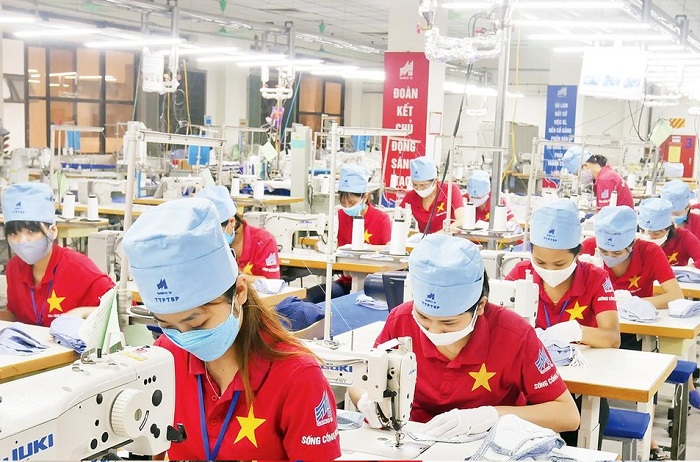
In 2024, Vietnam’s garment and textile industry recorded new growth thanks to preferential policies from Free Trade Agreements (FTAs) signed by Vietnam. The export turnover of the textile and garment sector reached USD 44 billion, an increase of 11.26% compared to 2023.
Major players in Vietnam’s garment export industry include Viet Tien Garment Corporation, Nha Be Garment Corporation, Phong Phu Corporation, and Vietnam National Textile and Garment Group (Vinatex).
The largest export market for Vietnamese garments is the United States, accounting for 37.98% of total export turnover, followed by Japan, the EU, South Korea, and China.
Despite many growth opportunities, the textile and garment industry also faces significant challenges, especially in the yarn sector, such as increasingly stringent quality requirements, complex product structures demanded by partners, low unit prices, short production timelines, and fast delivery requirements.
Enterprises must thoroughly understand documentation requirements, specialized inspection documents, official export procedures, and customs clearance regulations to ensure compliance with applicable laws.
2. Required Documents for Official Garment Exports
The signing of the EVFTA (EU–Vietnam Free Trade Agreement) has brought significant advantages to Vietnam’s textile and garment industry, particularly the reduction of import duties to 0% for garment products after a maximum of seven years from the agreement’s effective date.
EVFTA gives Vietnamese garments a strong price competitiveness advantage in the EU market. However, enterprises must clearly understand and strictly comply with rules of origin, especially the “fabric-forward” rule, which requires that fabric be woven in Vietnam or the EU in order for products to qualify for tariff preferences.
Required documents for exporting garment products from Vietnam include:
-
Sales Contract
-
Commercial Invoice
-
Bill of Lading
-
Customs Declaration
-
Packing List
-
Certificate of Origin (C/O), if applicable
-
Cargo Insurance Certificate, if applicable
-
Export License
-
Phytosanitary Certificate (Phyto), required for textile products related to raw materials that are subject to quarantine requirements
Each importing country has its own specific requirements regarding documentation and quality standards. Therefore, exporters should carefully research these requirements before proceeding.
Compliance with traceability regulations:
Ensure that all certifications related to raw materials and finished products meet international standards.
3. Latest Official Garment Export Procedures
The garment export process typically consists of the following six steps:
Step 1: Negotiate and sign the sales contract
Step 2: Apply for an export license (if required)
Applying for an export license is very important and often time-consuming, so it should be prepared in advance. Export procedures should only proceed once approval has been granted.
Step 3: Confirm payment and prepare export goods
After receiving the buyer’s deposit, the enterprise prepares and arranges goods for export.
Step 4: Make a booking with a shipping line, airline, or freight forwarder
Step 5: Transport goods to the port or airport for export and complete export customs clearance
Step 6: Send documents to the overseas buyer
After completing the document set, the exporter sends the original documents as agreed in the contract based on the payment schedule, and also sends scanned copies for the buyer to prepare import procedures.
4. Regulations Related to Garment and Textile Import and Export
Legal documents related to garment and textile import and export include circulars and decrees governing customs procedures, taxation, product quality, and special regulations for markets such as the United States, Europe, and Mexico, including:
-
Decree No. 187/2013/ND-CP guiding the Law on Commerce regarding international goods trading
-
Law on Export and Import Duties (2016)
-
Decree No. 21/2022/ND-CP, amending Decree No. 57/2019/ND-CP on preferential export and special preferential import tariffs to implement the CPTPP Agreement (2019–2022)
-
Circular No. 07/2019/TT-BCT regulating garment exports to Mexico under the CPTPP
-
Circular No. 16/2010/TT-BCT of the Ministry of Industry and Trade on issuing manufacturer identification codes for garments exported to the U.S. market
-
Circular No. 07/2019/TT-BCT on garment exports to Mexico
And other relevant circulars and decrees.
To stay updated on legal regulations and the latest policies on official exports, enterprises may participate in short-term import–export training courses at reputable institutions.
5. Exported Garment and Textile Products of Vietnam
Vietnam exports a wide range of textile and garment products, including apparel, fabrics, fibers, sewing accessories, and household textiles.
-
Finished garments:
The largest export group, including various types of clothing (T-shirts, shirts, jeans, dresses, sportswear, underwear, sleepwear, swimwear), uniforms, and protective workwear. -
Fabrics:
Including woven fabrics (cotton, polyester, denim), knitted fabrics (single jersey, interlock), and technical fabrics (waterproof, antibacterial). -
Fibers and yarns:
Including cotton fibers, synthetic fibers (polyester, nylon), and blended yarns. -
Garment accessories:
Essential accessories such as sewing threads, buttons, zippers, and labels. -
Other textile products:
Including towels, blankets, bed sheets, pillows, and mattresses. -
Main export markets:
The United States, the EU, Japan, South Korea, and China.
6. Notes for Official Garment Exports
When exporting garment products, enterprises should pay attention to the following key points to ensure a smooth and efficient process:
Compliance with Market Regulations
-
Understand rules of origin to enjoy tariff preferences (FTA, C/O), especially under agreements such as EVFTA, CPTPP, and RCEP.
-
Meet quality standards (chemical content, durability, safety), particularly for demanding markets such as the EU, U.S., and Japan.
-
Ensure accurate labeling in accordance with importing country regulations.
-
Pay attention to environmental and social compliance standards.
Supply Chain Management
-
Strictly control the origin and quality of input materials.
-
Assess production capacity to meet order requirements.
-
Implement quality control (QC) at all stages.
Documentation and Customs Procedures
-
Prepare complete and accurate document sets (Contract, Invoice, Packing List, Bill of Lading, C/O, etc.).
-
Declare customs accurately with correct HS codes.
-
Select secure payment methods.
Logistics and Transportation
-
Choose appropriate Incoterms to clearly allocate responsibilities.
-
Pack garment goods carefully and securely.
-
Cooperate with reputable logistics partners.
Risk Management
-
Consider exchange rate fluctuations and raw material price volatility, especially cotton and yarn.
-
Anticipate market risks such as changes in consumer demand or protectionist policies in importing countries.
-
Purchase cargo insurance to cover transportation risks.
If you are planning to enter the international garment export market, minimize risks, and optimize profits, consider consulting services at K PLUS. This is where you can gain not only in-depth knowledge but also valuable practical experience from leading experts, helping you confidently and efficiently export garment products.